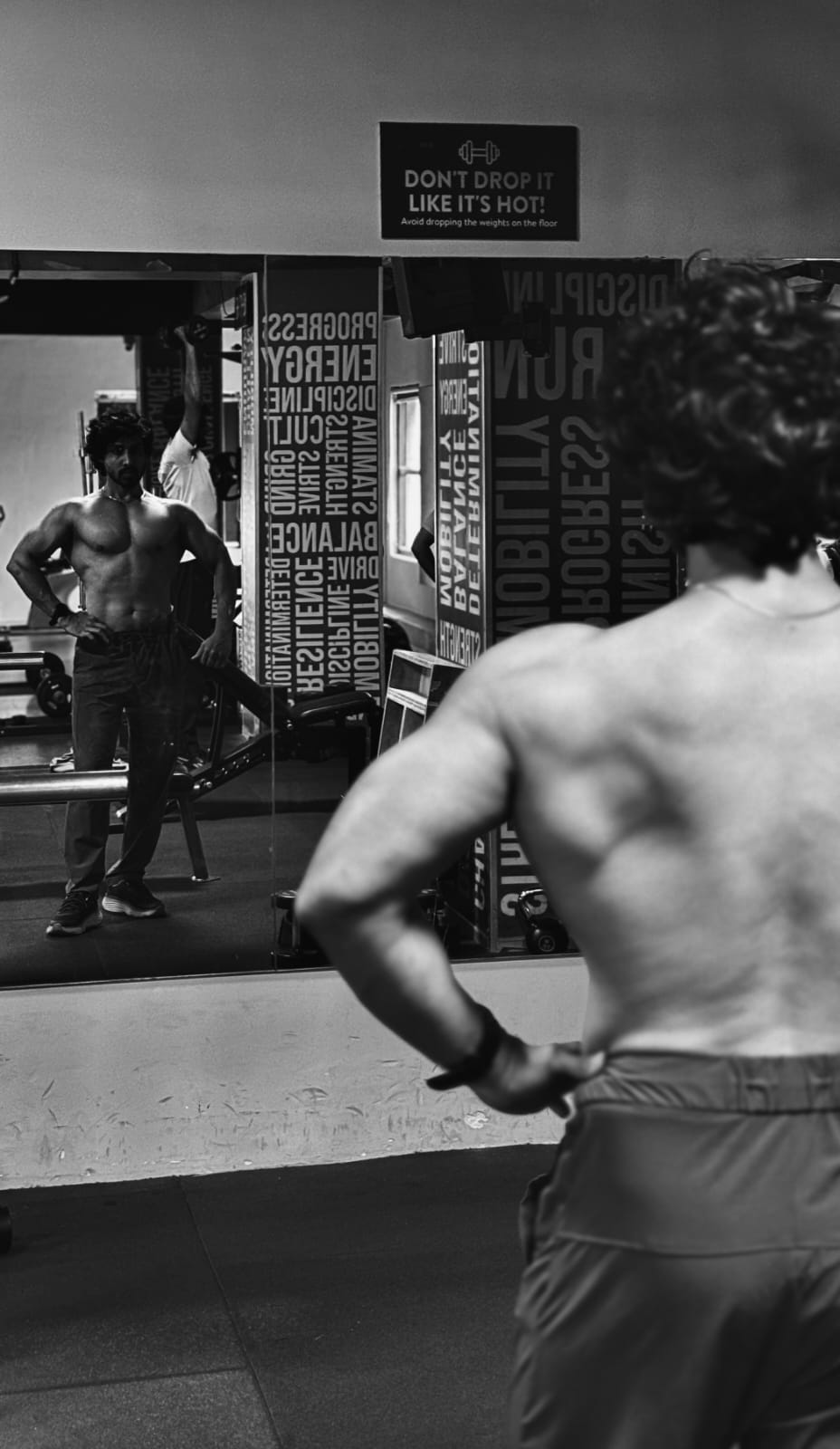
Most people who try to lose weight end up looking worse after — not better. They step on the scale, see a smaller number, and wonder why they still look soft, flat, or "skinny fat." The reason is almost always the same: they lost muscle, not fat. They shrank, but didn't lean out.
This guide is specifically about avoiding that trap. The real goal isn't weight loss — it's fat loss while preserving or building lean muscle mass. Those two things look completely different in the mirror, even when the scale reads the same number.
And on an Indian diet, this challenge is especially real. Most Indian meals are built around rice, roti, and sabzi — which means carbohydrates make up 60–70% of the plate, often leaving protein dangerously low. When you then go into a calorie deficit without addressing your protein intake or adding strength training, your body does exactly what you don't want: it burns muscle for fuel. The result is a smaller but softer body.
This guide will walk you through every piece of the puzzle — the right calorie deficit, how much protein you actually need, which Indian foods to prioritise, how to structure your training, and a full 7-day Indian fat loss meal plan. By the end, you'll know exactly what to do — and what not to do.
Why Losing Muscle Is the #1 Fat Loss Mistake
Muscle is not just about strength or appearance — it is metabolically active tissue. Every kilogram of muscle you carry burns extra calories at rest, even while you sleep. When you lose muscle, your metabolism slows down. This is the reason so many people lose weight and then rapidly regain it: they dieted away the tissue that was helping them burn calories in the first place.
The "skinny fat" phenomenon is what happens when someone loses 10 kg through aggressive dieting and minimal training. Yes, they are lighter. But they have less muscle, higher body fat percentage, and a slower metabolism than when they started. They look softer. Their arms and legs are thin but their midsection remains flabby. Clothes still don't fit well. This is an extremely common outcome and it is completely avoidable.
Muscle is also what gives you the "toned" look that everyone is actually after. When someone says they want to "tone up," what they really mean is: reduce body fat and increase visible muscle definition. You cannot achieve that look without preserving or building muscle. There is no such thing as toning without muscle — you cannot spot-train softness away. Fat comes off through a calorie deficit; the shape underneath is determined by how much muscle you have.
Eating fewer than 1,200 calories per day (women) or 1,500 calories per day (men) almost guarantees significant muscle loss. At these extreme deficits, your body lacks enough amino acids from diet alone to protect lean tissue and begins breaking down muscle for energy. You lose weight fast — but the wrong kind.
The take-away: never evaluate your programme only by the scale. Track body measurements, how your clothes fit, strength in the gym, and how you look in the mirror. These tell you far more than body weight alone.
Understanding the Right Calorie Deficit
A calorie deficit simply means you are consuming fewer calories than your body burns in a day. When you do this consistently, your body has to pull energy from stored fuel — ideally stored body fat. The size of the deficit determines how fast you lose weight, and critically, how much of that weight is fat versus muscle.
How to calculate your starting point (TDEE)
TDEE stands for Total Daily Energy Expenditure — basically, how many calories you burn in a day. A quick and reliable estimate: multiply your bodyweight in kilograms by 30–35. A 70 kg person with a moderately active lifestyle burns roughly 2,100–2,450 kcal/day. That becomes your maintenance number. Your target is to eat 400–600 kcal below that.
| Type | Deficit | Rate of Loss | Muscle Risk | Energy | Recommended? |
|---|---|---|---|---|---|
| Crash Diet | 1,000+ kcal/day | 1–2 kg/week | Very High | Very Low | No |
| Aggressive | 700–1,000 kcal/day | 0.7–1 kg/week | High | Low | No |
| Moderate | 400–600 kcal/day | 0.4–0.6 kg/week | Low | Good | Yes ✓ |
| Slow | 200–400 kcal/day | 0.2–0.4 kg/week | Very Low | Excellent | Yes (athletes) |
A moderate deficit of 400–600 kcal is the sweet spot for the vast majority of people. It is slow enough to spare muscle, fast enough to see visible progress within weeks, and comfortable enough to maintain without feeling miserable. At this rate, a 70 kg person should expect to lose 1.6–2.4 kg of actual fat per month — which adds up to 10–15 kg over 6 months of consistent effort.
Keep the 80/20 rule in mind: approximately 80% of your results in fat loss come from diet, and 20% from exercise. You cannot outrun a bad diet. Equally, you cannot preserve muscle without the training signal — which is why both are essential, but diet is the larger lever.
If you are eating below your calorie target but not losing weight, do not immediately cut calories further. First check for sodium and water retention — a high-sodium meal can cause 1–2 kg of water weight to appear overnight. Track your weight as a 7-day rolling average for a true picture of fat loss progress.
Protein: The Most Important Macronutrient for Fat Loss
If there is one non-negotiable in any fat loss plan that preserves muscle, it is adequate protein intake. Protein is the only macronutrient the body uses to repair and build muscle tissue. When you are in a calorie deficit, dietary protein is what stands between your body maintaining its muscle and cannibalising it for fuel.
There are three powerful reasons protein is critical during a fat loss phase:
1. Muscle protein synthesis: Protein provides the amino acids necessary to keep muscle fibre intact. Without enough protein, even strength training cannot fully prevent muscle breakdown during a deficit.
2. The thermic effect of food: Your body burns 25–30% of the calories from protein just in the process of digesting it. Eat 200 kcal of protein and your net gain is only 140–150 kcal. No other macronutrient comes close — fat burns about 3%, carbohydrates about 8%. High protein automatically boosts your metabolic rate slightly.
3. Satiety: Protein keeps you fuller for longer than carbohydrates or fat at the same calorie count. High protein meals suppress hunger hormones more effectively, making it easier to stay in your deficit without feeling deprived.
To put this in context: a typical Indian diet — two meals of dal-roti or dal-rice with minimal eggs, chicken, or paneer — delivers roughly 50–70g of protein daily. That is less than half of what is needed to preserve muscle during a fat loss phase. Fixing this protein gap is often the single biggest change you can make.
Indian Foods High in Protein
The good news is that India has some of the most affordable and accessible protein sources in the world — they are just not always front and centre in traditional meal planning. Here is a practical checklist of high-protein Indian foods with actual numbers:
- Eggs — 6g of protein per egg. Cheapest, most bioavailable protein source available. 3 whole eggs = 18g protein.
- Chicken breast — 30g of protein per 100g cooked. The gold standard for lean protein in India. Easy to cook with Indian spices.
- Paneer — 18g per 100g. Excellent for vegetarians. Best consumed in its natural form rather than deep-fried.
- Dal (masoor / moong) — 9g per 100g cooked. Also high in fibre. Pair with rice or roti for a complete meal.
- Greek yogurt / hung curd — 10g per 100g. Regular dahi is lower (~3–4g/100g); strained hung curd is much higher.
- Soya chunks (meal maker) — 52g per 100g dry weight. The most protein-dense affordable food in India. Available at ₹40–60/kg.
- Fish (rohu / katla / surmai) — 20g per 100g. Also rich in omega-3 fatty acids which support fat loss.
- Rajma / chickpeas (cooked) — 9g per 100g. Paired with rice, provides a near-complete amino acid profile.
- Full-fat milk — 8g per 250ml glass. Easy to add to your day without any preparation.
- Whey protein — 24–30g per scoop. A supplement, not a food — but useful if you consistently struggle to hit your target through food alone.
Soya chunks (meal maker) are the most protein-dense affordable food in India, at roughly ₹40–60 per kilogram. 100g dry provides 52g of protein. Cook them in any sabzi, add to pulao, or make a dry stir-fry — they absorb flavour well and are completely filling.
Sample day: hitting 140g protein on Indian food
Here is proof it is possible without supplements, and without eating chicken at every meal:
- Breakfast: 3 whole eggs scrambled + 1 glass full-fat milk = 26g protein
- Mid-morning: 100g hung curd with a handful of roasted chana = 18g protein
- Lunch: 150g chicken breast curry + 2 roti + dal = 52g protein
- Evening snack: 50g dry soya chunks (cooked) = 26g protein
- Dinner: 100g paneer bhurji + 1 roti + salad = 22g protein
- Total: approximately 144g protein
Trainer Anil creates personalised fat loss programs with Indian diet plans built around your food preferences.
Why Strength Training Is Non-Negotiable
The single biggest mistake people make when trying to lose fat is doing only cardio while severely restricting calories. This combination is the fastest route to the "skinny fat" outcome. Cardio burns calories in the session — but it sends no signal to your body to hold on to muscle. Without a reason to keep its muscle, a body in a deficit will burn muscle for energy just as readily as fat.
Strength training changes this equation entirely. When you lift heavy and challenge your muscles, your body receives a direct signal: these muscles are needed, protect them. This is the "use it or lose it" principle in practice. You do not necessarily need to build new muscle during a fat loss phase (though it is possible for beginners). You simply need to send the signal to keep the muscle you have.
The minimum effective dose is 3 days per week of compound strength training. You do not need to spend two hours in the gym. A focused 45–60 minute session built around compound movements is enough to preserve muscle through a deficit.
The compound movements that matter most
These five movements work the largest muscle groups in your body and give you the most return on your training time:
- Squats — quads, hamstrings, glutes, core
- Deadlifts — posterior chain, lower back, glutes, hamstrings
- Bench Press / Push-ups — chest, shoulders, triceps
- Rows (barbell / dumbbell / cable) — back, biceps, rear deltoids
- Shoulder Press — shoulders, triceps, upper back
A basic 3-day fat loss + muscle preservation split
-
Mon
Upper Body
Bench press or push-ups, dumbbell rows, shoulder press, bicep curls, tricep dips. 3–4 sets of 8–12 reps each. Focus on maintaining weight from previous week even in deficit.
-
Wed
Lower Body
Squats, Romanian deadlifts, lunges, leg press, calf raises. The lower body contains the largest muscles in the body — training them burns the most calories and preserves the most metabolically active tissue.
-
Fri
Full Body
Deadlifts, pull-ups or lat pulldown, dips, goblet squats, farmer's carries. Full body sessions reinforce the muscle-retention signal across all major groups and end the week strong.
During a calorie deficit, you may not be able to increase your weights every week. That is normal. The goal is to maintain intensity and load. If you were squatting 60 kg last month, aim to still squat 60 kg this month. That maintenance of intensity is the signal your body needs to keep its muscle.
The Right Role of Cardio
Cardio is a tool — not a punishment, and not the foundation of fat loss. The most common and damaging pattern in Indian fitness culture is: go on a strict diet, run or do hours of aerobics every day, and skip weight training entirely. This approach consistently leads to muscle loss, fatigue, hormonal disruption, and eventual burnout.
Cardio's actual role in fat loss is simple: it is an additional way to increase your daily calorie expenditure, creating or deepening your deficit. Nothing more. When done in excess without adequate protein and strength training, especially in a significant calorie deficit, cardio forces the body to break down muscle tissue for energy. Cortisol (a stress hormone) rises, which is directly catabolic to muscle.
The recommended approach: 20–30 minutes of moderate cardio, done 2–4 times per week, performed after your strength training — not before. This order ensures your energy reserves are used for muscle-preserving heavy lifting first, and cardio gets the remainder.
| Cardio Type | Frequency | Muscle Risk | Fat Loss Effect | Cortisol Impact |
|---|---|---|---|---|
| HIIT | 2x / week max | Moderate | High (short term) | High |
| Moderate (cycling / swimming) | 2–3x / week | Low | Good | Low–Moderate |
| Brisk Walking | Daily (30–60 min) | Very Low | Excellent (cumulative) | Very Low |
Walking is massively underrated in Indian fitness culture. A 60-minute brisk walk burns 300–400 kcal depending on your weight, raises no cortisol, requires no recovery, and can be done every single day. Over a month, daily walking adds up to 9,000–12,000 kcal of extra expenditure — the equivalent of burning 1.2–1.5 kg of pure fat, without touching your strength training or recovery.
He'll combine strength training and cardio in exactly the right ratio for your body and schedule.
7-Day Sample Indian Fat Loss Meal Plan
This plan is designed around approximately 1,600–1,800 kcal and 130g+ protein per day, using real Indian food. It is practical, affordable, and does not require exotic ingredients. Each day includes breakfast, a mid-morning snack, lunch, an evening snack, and dinner.
This is a sample plan to show you what the right structure looks like. Exact portions depend on your height, weight, age, and activity level. Contact Trainer Anil for a fully personalised plan calibrated to your body.
Day 1
- Breakfast: 3 whole eggs (any style) + 2 besan chilla with green chutney
- Snack: 1 glass buttermilk + 1 handful roasted chana
- Lunch: 2 roti + masoor dal + mixed sabzi + 100g curd
- Evening snack: 1 cup moong dal sprouts with lemon and chaat masala
- Dinner: 150g grilled chicken tikka + cucumber-tomato salad + 1 cup rajma
Day 2
- Breakfast: 1 cup daliya upma with vegetables + 1 glass milk
- Snack: 100g hung curd with cucumber
- Lunch: 150g fish curry (rohu/surmai) + 1 cup brown rice + salad
- Evening snack: 50g dry soya chunks (cooked as sabzi)
- Dinner: 150g paneer bhurji + 2 roti + palak sabzi
Day 3
- Breakfast: 3-egg omelette with onion, tomato, and green chilli + 2 poha (small serving)
- Snack: 1 cup moong dal soup
- Lunch: Chicken breast (150g) + 2 roti + baingan sabzi + curd
- Evening snack: 1 glass full-fat milk + 10 almonds
- Dinner: Rajma (1 cup cooked) + 1 cup brown rice + onion salad
Day 4
- Breakfast: 2 idli + sambar (lentil-based, protein-rich) + 1 boiled egg
- Snack: Greek yogurt / hung curd (150g)
- Lunch: Egg curry (3 eggs) + 2 roti + green beans sabzi
- Evening snack: Roasted makhana (1 cup) + buttermilk
- Dinner: 150g chicken + tinda sabzi + 1 cup dal + 1 roti
Day 5
- Breakfast: Soya chunks bhurji (50g dry) + 2 whole wheat toast
- Snack: 1 glass milk + 1 banana
- Lunch: 150g fish + 1 cup rice + dal + salad
- Evening snack: 100g paneer cubes with black pepper and lemon
- Dinner: Chickpea (chana) curry + 2 roti + raita
Day 6
- Breakfast: Masala oats (cooked with milk) + 2 boiled eggs
- Snack: Sprouts salad (mixed dal sprouts with tomato, cucumber, lemon)
- Lunch: Chicken keema (150g) + 2 roti + raita + salad
- Evening snack: 1 glass buttermilk + handful peanuts
- Dinner: Dal tadka (masoor/toor) + 1 cup rice + papad + salad
Day 7 (slightly flexible — rest day treat)
- Breakfast: Moong dal chilla (3 pieces) + green chutney + 1 cup chai (no sugar)
- Snack: 100g curd + 1 fruit
- Lunch: Rajma chawal (portion-controlled) + salad + 1 glass chaas
- Evening snack: 50g soya chunks stir-fry
- Dinner: 2 egg bhurji + 1 roti + mixed vegetable soup
Sleep & Stress: The Hidden Saboteurs
You can have the perfect calorie deficit, hit your protein targets every day, and train hard four times a week — and still fail if your sleep is poor and your stress is unmanaged. This is not an exaggeration. Sleep and stress directly control the hormonal environment that determines whether your body burns fat or muscle.
What poor sleep does to fat loss
During deep sleep, your body releases growth hormone — the primary hormone responsible for fat oxidation and muscle repair. Without adequate sleep, growth hormone secretion drops significantly. Simultaneously:
- Ghrelin (hunger hormone) rises by 24% after even one night of poor sleep. You feel genuinely hungry, not just emotionally hungry.
- Leptin (satiety hormone) drops — meaning you feel hungry even after you have eaten enough.
- Cortisol rises — cortisol is directly catabolic to muscle. Chronically high cortisol tells your body to store fat (especially belly fat) and break down muscle.
- Insulin sensitivity decreases — making it harder for your body to use carbohydrates for energy and easier for it to store them as fat.
Research consistently shows that people on identical calorie deficits lose significantly less fat and significantly more muscle when they sleep fewer than 7 hours compared to those sleeping 8 hours. Sleep is not optional for body recomposition — it is as important as your diet and training.
Practical steps to improve sleep quality
- Aim for 7–8 hours of uninterrupted sleep every night, including weekends. Your body does not distinguish between weekdays and weekends.
- Keep a consistent sleep schedule — same bedtime and wake time every day. This anchors your circadian rhythm.
- No screens for 60 minutes before bed. Blue light from phones and TVs suppresses melatonin production by 50%.
- Keep the room cool and dark. Core body temperature needs to drop slightly to initiate deep sleep.
- Avoid heavy meals within 2 hours of sleep. Digestion interferes with the quality of deep sleep stages.
Managing stress to protect your physique
Chronic stress from work, relationships, or finances keeps cortisol elevated around the clock. This directly drives fat storage around the abdomen and muscle breakdown. Stress-eating is also one of the most common reasons fat loss plans derail — one bad week at work leads to a week of poor eating, and the progress of three weeks is undone in days.
Two practical strategies: first, a brief evening walk (20 minutes) lowers cortisol more effectively than most other interventions. Second, a consistent bedtime routine signals to your nervous system that the day is over — read, stretch lightly, or meditate for 10 minutes.
If you struggle with late-night hunger, try 1 cup warm milk with a pinch of haldi (turmeric) — the casein protein in milk digests slowly overnight and supports muscle protein synthesis. Alternatively, 100g curd with a small fruit is low-calorie, high-protein, and genuinely satisfying.
Key Takeaways
- A moderate deficit of 400–600 kcal/day gives sustainable fat loss without muscle loss — do not go more aggressive than this.
- Eat 1.6–2.2g of protein per kg of bodyweight every single day. This is non-negotiable for preserving muscle in a deficit.
- Strength train at least 3 times per week. Without this signal, your body has no reason to hold on to its muscle.
- Cardio is a tool — 20–30 minutes, 2–4 times per week, done after weights is the optimal approach.
- Sleep 7–8 hours every night. It directly controls the hormones that govern fat loss and muscle retention.
- Soya chunks, eggs, dal, paneer, and chicken are your best protein sources in India — affordable and widely available.
Frequently Asked Questions
Yes. Home bodyweight training — push-ups, squats, lunges, planks, glute bridges — combined with the right diet absolutely preserves muscle and drives fat loss. The gym makes things easier and faster because you can progressively add weight, but home training works, especially in the early stages. Trainer Anil specifically provides home training sessions for clients who cannot access a gym, with progressive programming designed for home environments.
The science-backed optimal range is 0.4–0.7 kg per week. That works out to 1.6–2.8 kg per month — which adds up to 10–15 kg over 6 months of consistent effort. This pace is fast enough to see clear visible progress while being slow enough to preserve virtually all of your muscle. Anyone promising faster results — 5 kg per month through pills, extreme diets, or magic plans — is putting your muscle mass and metabolic health at serious risk.
Yes. Cutting carbs completely is neither necessary nor sustainable on an Indian diet — and it can actually impair your strength training performance, which is the primary tool for preserving muscle. Keep carbohydrates from quality sources: roti, brown rice, oats, vegetables, fruits, and dal. The key change is reducing overall portion size and replacing refined carbs (maida, white sugar, packaged snacks) with whole-food sources. Protein and strength training matter far more than going low-carb.
Eating too little and doing too much cardio — simultaneously. This combination creates a massive calorie deficit that forces the body to break down muscle for energy. Cortisol spikes from excessive cardio and insufficient recovery accelerate this. The result: the scale goes down, but the person looks worse — less muscle definition, softer midsection, lower energy. The fix is a moderate deficit, high protein, consistent strength training, and measured cardio.
No — but having a trainer dramatically increases your chances of success. Most people who try alone either do too much too fast (overtraining, injury, burnout) or too little too slow (stalled progress, lost motivation, quit within 8 weeks). A good trainer sets the right pace from week one, adjusts your plan as your body changes, holds you accountable when motivation fades, and catches mistakes before they become setbacks. The cost of a trainer for 3 months is usually less than the cost of months of wasted effort doing the wrong things.
About Trainer Anil
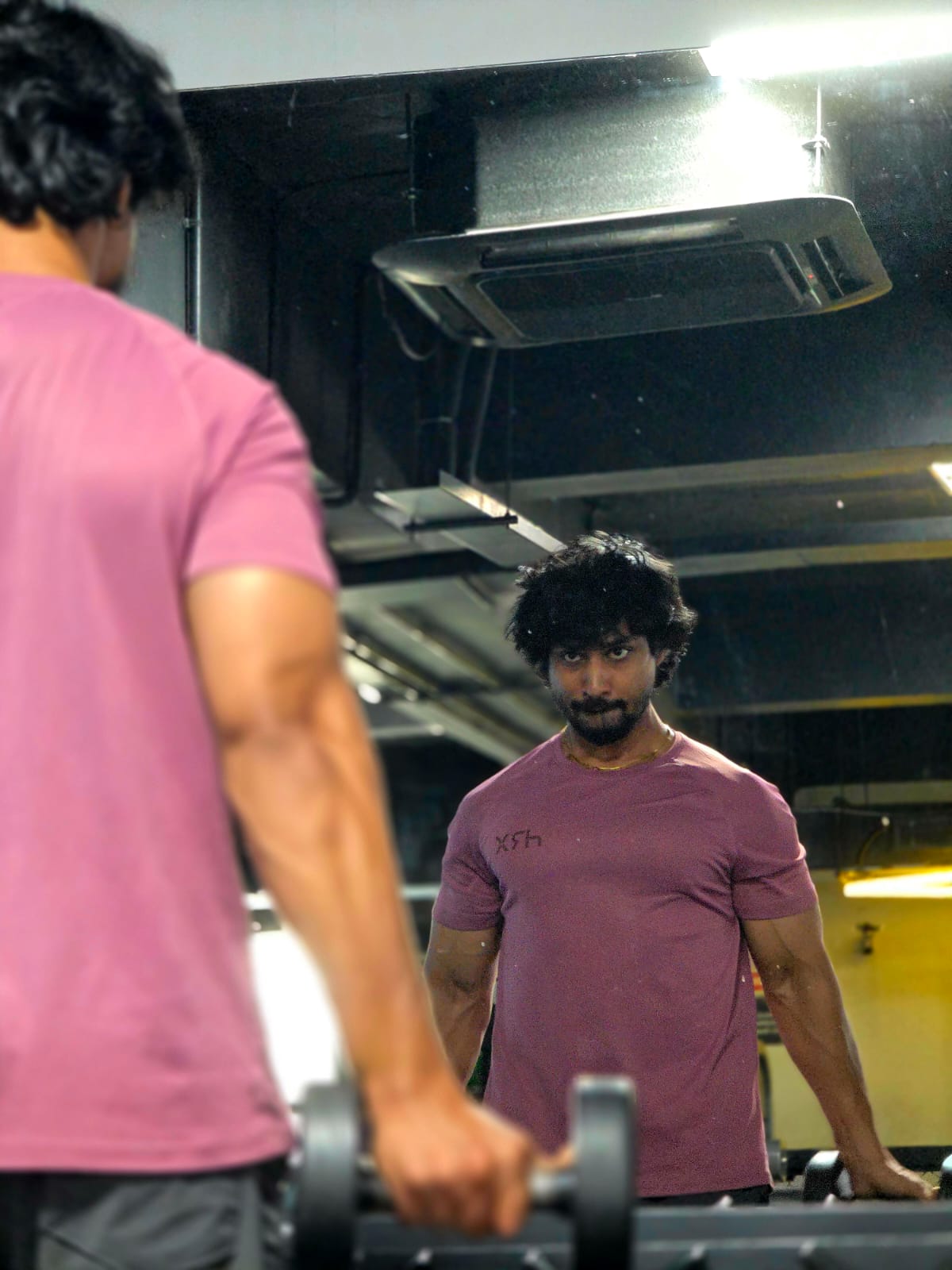
Anil is a certified personal trainer with 325+ client transformations across India. He specialises in fat loss, muscle building, and strength training — with a deep understanding of how to achieve real results on an Indian diet. He works with clients online, at home, and at the gym, designing programmes that fit into real Indian lives — not just theory.
Ready to Lose Fat Without Losing Muscle?
Get a personalised fat loss programme from Trainer Anil — designed around your body, your Indian diet, your schedule, and your actual lifestyle. 325+ transformations and counting.